top of page

What Are the Top Travel Bag Types for 2026?

Travel Bags in 2026 will need to do more than hold clothes. They should suit the journey, carry comfortably, and keep essentials easy to reach. A rolling carry-on can glide through an airport, while a soft duffel fits more easily into a car trunk. Backpacks offer hands-free movement on crowded streets. There is no single winner. Not even close.

This guide compares the leading travel bag types for different trips, from brief work visits to longer holidays. It considers capacity, weight, access, organization, and likely durability. Doug Dyment, founder of OneBag.com and a longtime advocate of minimalist packing, promotes choosing luggage around the trip rather than packing for every possibility. A concise summary of that approach is: “Choose the bag for the journey, not for every imagined contingency.” That principle is useful, though real trips can be messy. A rainy transfer or an unexpected extra layer may change what feels practical.

The sections ahead examine carry-on suitcases, checked luggage, travel backpacks, duffels, and personal-item bags. They also consider hybrid designs and features worth checking, such as sturdy zippers, comfortable straps, and accessible pockets. Labels can make a bag sound ideal; a loaded bag on a long walk tells a more honest story. Use these comparisons as a starting point, then match your choice to your route, packing habits, and comfort needs. One detail may still be easy to overlook: the best bag is not always the lightest one.
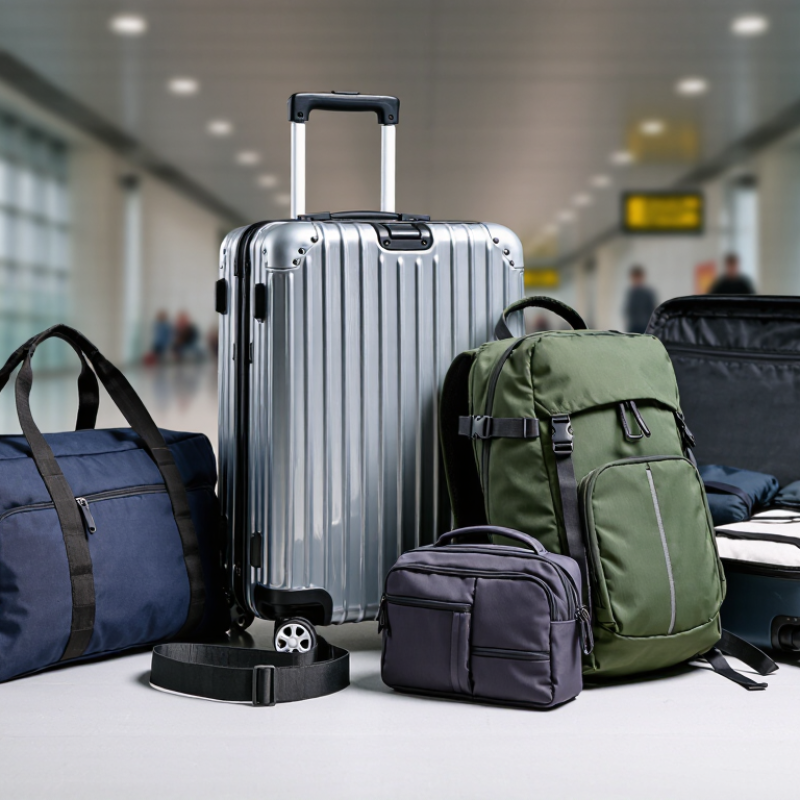
What Are the Top Travel Bag Types for 2026?

Set 2026 Travel Context with IATA’s 5.2B Passenger Forecast for 2025

IATA forecast 5.2 billion air passengers worldwide in 2025, a projection that signals continued pressure on busy airports and flight services. It is a forecast, not a confirmed passenger count. A figure on this scale matters to travelers because crowded terminals leave less room for bulky, awkward luggage. Small delays can also make quick access to documents, medication, or a charger feel important.

For 2026 trips, the right bag depends on how you travel. A compact carry-on can keep essentials close and reduce time at baggage claim, but it must fit the airline’s current size rules. A checked spinner suits longer journeys and heavier packing; sturdy wheels and a handle that locks firmly are practical details. A travel backpack works well for stairs and short connections, while a soft duffel can be easier to squeeze into a car trunk. A huge number.

Passenger growth alone cannot tell us which bag will be best. Routes, aircraft, airport layouts, and personal needs vary. IATA’s projection offers useful context, but it does not promise that every airport will be crowded. I would choose for the hardest part of the itinerary, not just the number of days away. A bag that looks ideal online may feel tiring after a long walk through a terminal.

Compare Carry-On and Checked Suitcases Against SITA’s 6.9 Mishandled Bags per 1,000

What Are the Top Travel Bag Types for 2026?

SITA’s Baggage IT Insights 2024 puts global mishandling at 6.9 bags per 1,000 passengers in 2023, down from 7.6 the year before. The report also records 36.1 million mishandled bags.

These figures concern the checked-baggage system, not every suitcase travelers bring aboard. A carry-on stays within reach, which can make a missed connection less stressful. But crowded overhead bins and tight cabin limits can turn a small case into a nuisance.

Checked suitcases suit longer trips or bulky clothing, yet they enter a handoff chain involving counters, belts, transfers, and aircraft. The risk is real, though the rate also shows most bags are not mishandled. For a short journey, a compact carry-on can keep a change of clothes and chargers close. For a longer one, a checked case may be more practical; keep one day’s essentials in a smaller personal bag. That is not foolproof.

A sensible choice depends on your route, connection time, and what you cannot easily replace. SITA’s 2023 baggage report recorded a higher rate than its 2024 report, but one year’s improvement is not a promise about your flight. I would still leave a little room in the plan. Airport handoffs are hard to predict.

Assess Backpacks and Duffels as UN Tourism Reports 1.4B Arrivals in 2024

UN Tourism reported about 1.4 billion international tourist arrivals in 2024, nearly returning to 2019 levels. That scale matters when choosing a travel bag: busy stations, full overhead bins, and crowded sidewalks reward luggage that stays manageable. A backpack keeps both hands free and works well on uneven streets or when changing trains. Look for padded shoulder straps, a supportive back panel, and compartments that make passports and chargers easy to reach. A bag that feels light at home can feel very different after a long airport walk.

Duffels suit travelers carrying flexible loads, such as spare shoes, bulky clothing, or sports gear. Their wide openings make packing simple, but a heavy duffel can strain one shoulder and become awkward in a queue. Some models include wheels or backpack straps, though extra features can add weight. Crowds change everything. A common packing mistake is choosing capacity over comfort; an oversized bag may be harder to lift into a train rack. Before buying, test the bag with the items you actually plan to carry. The best choice depends less on arrival figures than on your route, transfer time, and willingness to carry the load. I would not treat either style as universally better.

What Are the Top Travel Bag Types for 2026? — Assess Backpacks and Duffels as UN Tourism Reports 1.4B Arrivals in 2024

A practical comparison of common travel-bag types, with approximate capacity ranges and key trade-offs for different kinds of trips.

Bag type Typical capacity (approx.) Best suited to Main advantages Points to consider
Travel backpack 20–40 L City breaks, public transport, and trips involving stairs or uneven routes Hands-free carrying; easy to move through crowded spaces Fit, back support, and packed weight matter. Carry-on acceptance depends on the airline’s size and weight limits.
Duffel bag 30–60 L Weekend trips, sports gear, and flexible packing needs Large main compartment; often easy to pack and store when empty Can be less comfortable to carry over long distances, especially when heavily loaded.
Wheeled carry-on suitcase 30–45 L Short trips with smooth airport, station, and hotel routes Wheels reduce the need to carry the full load Cabin-bag size limits vary by airline, fare, and route; wheels and handles count toward overall dimensions.
Checked suitcase 60–100 L Longer holidays, family travel, or trips requiring more clothing and equipment Higher packing capacity; suitable for items that do not need to stay in the cabin Check the airline’s checked-baggage allowance, including weight and dimensions, before departure.
Personal-item bag 10–25 L Essentials kept close at hand, or minimalist short trips Compact and convenient for documents, devices, and in-transit necessities “Personal item” dimensions are set by each airline and may differ from standard cabin-bag limits.

Travel context: UN Tourism reported an estimated 1.4 billion international tourist arrivals worldwide in 2024, about 99% of the 2019 level. Capacity ranges above are approximate planning guides, not standardized bag sizes. Always confirm baggage rules with the relevant airline.

Match Garment Bags and Specialty Cases to Business, Outdoor, and Gear Travel

For 2026 trips, choose a bag for the job, not just the journey. GBTA’s 2024 Business Travel Index Outlook estimated global business travel spending at $1.48 trillion that year. For suits, dresses, or presentation clothes, a garment bag with a wide hanger channel and adjustable straps helps limit creasing. Check its folded size against your airline’s cabin limits; they vary. Small detail. A pocket for ties or access cards also saves rummaging at check-in.

Outdoor trips and equipment travel need different protection. The Outdoor Industry Association’s 2024 report counted 175.8 million U.S. outdoor recreation participants in 2023. A water-resistant duffel can hold muddy layers, while padded specialty cases protect optics, helmets, or instruments from knocks. Separate wet items in a wipe-clean compartment. Test it loaded. Padding alone cannot stop fragile gear from shifting inside. UN Tourism recorded about 1.4 billion international tourist arrivals in 2024, nearly 99% of 2019 levels. Flexible packing matters. Still, more compartments are not always better; they can slow packing, and that trade-off deserves a second look.

Rank Bag Types by Capacity, Mobility, Durability, and Airline Baggage Rules

Capacity favors the large checked suitcase, typically offering about 70–110 liters for longer trips. It carries bulky layers, but wheels and a full load become awkward on stairs. A carry-on roller usually holds roughly 35–45 liters and balances space with easier handling. A travel backpack often offers less room, yet leaves both hands free on crowded platforms. Small personal-item bags have the least capacity. They are useful for essentials, not a week’s wardrobe. Figures vary by shape and measuring method.

For mobility, backpacks and compact rollers usually beat large cases; for durability, reinforced seams, sturdy zippers, and replaceable wheels matter more than bag type alone. A soft duffel can flex into tight spaces, though carrying it far may strain one shoulder.

SITA’s 2024 Baggage IT Insights report recorded 6.9 mishandled bags per 1,000 passengers in 2023. That makes a secure, clearly identifiable checked bag a sensible choice, not a guarantee. Cabin rules vary by airline, route, and fare. Measure the packed bag, including wheels and handles, and check the operating carrier’s current limits before departure. Easy to overlook. I’d still leave a little room; an overfilled bag may not fit the sizer.

bottom of page