China Best Travel Bags Manufacturers for Global Buyers
China has become a major sourcing destination for global Travel Bags buyers, offering broad manufacturing capacity and flexible product development. From compact weekenders to reinforced business backpacks, Chinese factories serve different markets, price levels, and usage requirements. Yet a large catalog does not always mean dependable quality.
Travel-bag specialist and OneBag.com founder Doug Dyment advises, “The less you carry, the more you can do.” This principle remains useful when evaluating suppliers. A well-designed bag should balance weight, storage, comfort, durability, and appearance. Buyers should examine fabric denier, zipper performance, stitching density, handle reinforcement, lining quality, and load-bearing tests. Small details matter. A loose thread can become a failed shipment.
This guide introduces leading China Travel Bags manufacturers for global buyers. It focuses on factory experience, product specialization, customization ability, quality-control systems, communication, and export reliability. Reliable suppliers should provide clear specifications, realistic samples, transparent pricing, and documented inspection procedures. They should also explain material choices instead of making vague claims about sustainability or waterproofing.
The process is not always smooth. A polished sample may hide production inconsistencies. A low quotation may exclude packaging, testing, or shipping costs. Buyers may also discover that their first design is attractive but uncomfortable after several hours of use. Careful sampling, factory audits, pre-shipment inspections, and written agreements can reduce these risks. No supplier is perfect. Strong partnerships grow through evidence, honest questions, and continuous improvement.
China’s Travel Bag Manufacturing Industry: Scope and Global Role
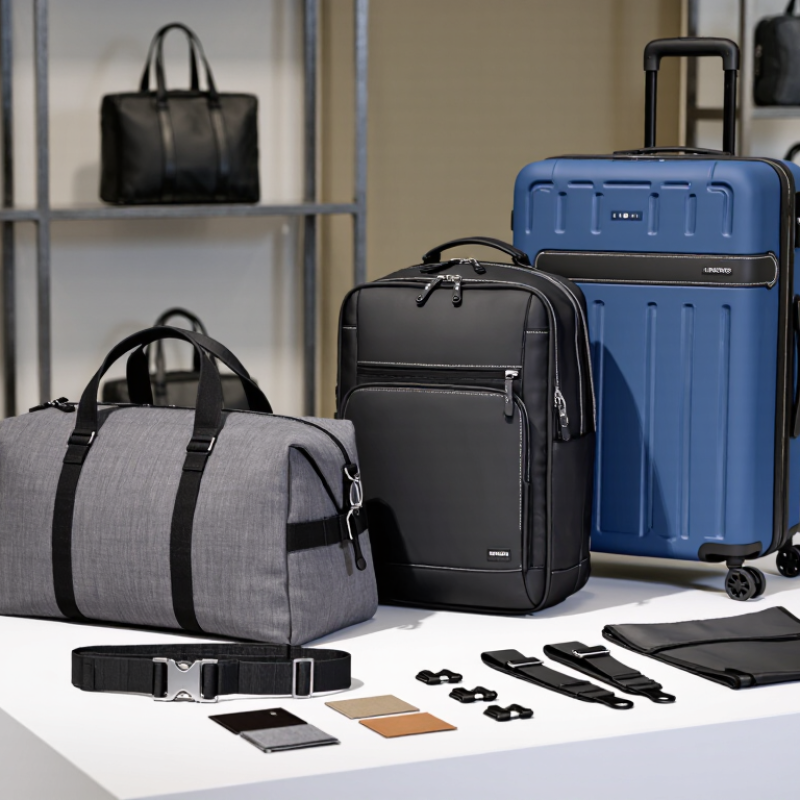
China’s travel bag manufacturing industry serves a broad global market, from weekend duffels to structured wheeled luggage. Production networks span material suppliers, cutting workshops, sewing lines, hardware makers, and inspection teams. This depth lets buyers compare capacity, materials, lead times, and customization in one sourcing region. In practical purchasing work, strong factories explain these links clearly. They do not rely on attractive samples alone. Sample quality can hide production weaknesses.
Manufacturers commonly use polyester, nylon, recycled fabrics, coated textiles, aluminum components, and molded plastics. Each material affects weight, abrasion resistance, water protection, and cost. Professional buyers should review fabric test reports, zipper performance, wheel endurance, stitching density, and load-bearing points. Factory audits should examine worker training, process records, corrective actions, and final inspection methods. Small details matter. A loose bartack can fail during a crowded airport transfer.
China’s global role also comes from flexible order management. Some suppliers support large seasonal programs, while others handle smaller trial orders and frequent design changes. Export experience helps factories prepare carton markings, packing specifications, and destination requirements. Yet the industry is not flawless. Communication gaps, rushed approvals, and inconsistent recycled-content documentation still create avoidable risks. Buyers should confirm tolerances in writing and test production samples before scaling. Clear records are less glamorous, but more reliable. The best sourcing decisions come from evidence, not promises.
How to Evaluate Chinese Travel Bag Suppliers
China Best Travel Bags Manufacturers for Global Buyers
How to Evaluate Chinese Travel Bag Suppliers
A reliable supplier should provide more than attractive product photos. Request a factory profile, production capacity, export experience, and recent quality records. Check whether the workshop actually performs cutting, sewing, and final inspection. Some suppliers outsource key steps without explaining it clearly. That detail matters.
Order samples in several colors and sizes. Inspect stitching density, zipper movement, lining strength, handle attachment, and wheel stability. Fill each bag with realistic clothing and roll it across tile, carpet, and uneven pavement. Small defects often appear after repeated handling. Ask for material specifications, test reports, and inspection procedures. A polished sample is not proof of stable production.
Communication also reveals supplier quality. Request a clear quotation with material grades, dimensions, packaging, minimum order quantity, and lead time. Compare the written details with the sample. Ask how defects are recorded and corrected. Good suppliers answer directly and keep changes documented. Do not rely only on a quick factory video. It can show capability, but not daily consistency. I would avoid making a decision after one successful sample; that judgment is often too optimistic. A pre-shipment inspection can expose loose threads, uneven seams, or incorrect labels before goods leave the factory. Keep the criteria measurable. Vague trust is difficult to manage.
Materials, Production Standards, and Quality Control
For global travel bag buyers, material selection is a production decision, not a styling choice. Textile Exchange’s Materials Market Report 2024 recorded about 124 million tonnes of global fiber production in 2023. It expects this figure to reach 160 million tonnes by 2030. That pressure makes recycled polyester, nylon, cotton, and coated fabrics more important. Buyers should request fiber composition, fabric weight, yarn density, coating type, and recycled-content evidence. A cheaper fabric may fail at the zipper seam.
Production standards must be measurable.
Factories should control incoming materials, cutting accuracy, stitching density, bonding temperature, and logo placement. Useful laboratory checks include abrasion under ISO 12947, colorfastness under ISO 105, seam strength under ISO 13935-2, and water resistance under ISO 811. ISO 9001-based procedures can organize traceability and corrective actions. However, certification alone is not enough. An impressive certificate cannot repair weak sampling.
Quality control works best through several checkpoints.
Inspect fabric rolls before cutting, monitor the first production pieces, and use AQL sampling for finished bags. Test handles with repeated loads. Examine wheel attachments, buckle tension, lining tears, and coating adhesion. SGS’s Global Consumer Insights research has repeatedly shown that product quality and safety influence purchasing confidence, although exact priorities vary by market. Some factories still rely too heavily on visual inspection. That is a weakness. Buyers should keep retained samples, batch records, and independent test reports, then review failures honestly. Small details matter.
Export Services, Customization, and Buyer Considerations
China’s travel bag manufacturers increasingly support global buyers with export documentation, factory audits, and flexible production. Grand View Research valued the global luggage market at approximately USD 22.5 billion in 2023, with projected annual growth of 7.4% from 2024 to 2030. This growth raises buyer expectations. Suppliers should provide material specifications, carton dimensions, HS codes, packing lists, and commercial invoices before shipment. Ask for evidence. Reliable factories can also explain lead times, port options, inspection procedures, and handling of replacement goods. These details reduce customs delays and unexpected landed costs.
Customization works best when requirements are measurable. Buyers should confirm fabric weight, zipper performance, handle strength, wheel durability, logo placement, color tolerances, and packaging design. The International Trade Centre highlights product quality and market compliance as key factors in export competitiveness. A manufacturer that offers sampling, small trial orders, and pre-shipment inspection gives buyers more control. However, a polished sample can hide inconsistent bulk production. No assessment is perfect. Independent inspection remains sensible, especially for first orders. Sustainability claims also need verification, such as recycled-content certificates or test reports, rather than attractive wording alone. McKinsey research on consumer goods shows rising interest in sustainability, but buyers still compare price, durability, and delivery reliability. Customization may therefore need restraint; extra pockets and hardware can increase weight, costs, and failure points.
China Best Travel Bags Manufacturers for Global Buyers
China’s travel-bag export reach by selected destination markets, based on 2023 international trade data for HS 4202: trunks, suitcases, travel bags, handbags and similar containers.
The figures are rounded export values in US$ billions. The data is based on UN Comtrade records compiled by the International Trade Centre (ITC), HS 4202, 2023. Buyers should also evaluate customization capability, quality control, compliance documents, production lead time, packaging, and export support before selecting a supplier.