
How to Choose the Best Sports Cooler Bags?
Choosing the right Sports Cooler Bags is more practical than picking the largest model on a store shelf. A dependable bag should protect food, drinks, and ice during training, travel, or a long day outdoors. In real use, I have found that insulation quality matters more than attractive colors. A bag that looks sturdy may still warm quickly under direct sunlight. Small details matter. Strong zippers, sealed seams, and comfortable handles can prevent leaks and shoulder strain. However, no cooler bag performs perfectly in every condition. That limitation deserves attention.
This guide explains how to compare Sports Cooler Bags through measurable, everyday features. We will consider insulation thickness, internal capacity, ice retention, waterproof lining, and cleaning requirements. A bag for two water bottles needs different support from one carrying meal containers for a team. The shape also affects packing efficiency. Wide openings make loading easier, while reinforced bases help the bag stay upright on grass or uneven ground. I also recommend checking product specifications and independent customer feedback before buying. Marketing claims can be vague. Practical evidence is better.
Reliability includes more than cooling performance. Materials should feel durable without becoming unnecessarily heavy. Food-safe interior linings are important for regular use, especially when meals remain inside for several hours. Adjustable straps can improve comfort during walking, but their stitching should be inspected carefully. My own testing has shown that overpacking reduces cooling efficiency. It also stresses the zipper. The best choice balances capacity, portability, maintenance, and realistic usage conditions. That balance may look different for every athlete, coach, or outdoor enthusiast.
Understanding Sports Cooler Bag Types and Their Main Uses
How to Choose the Best Sports Cooler Bags?
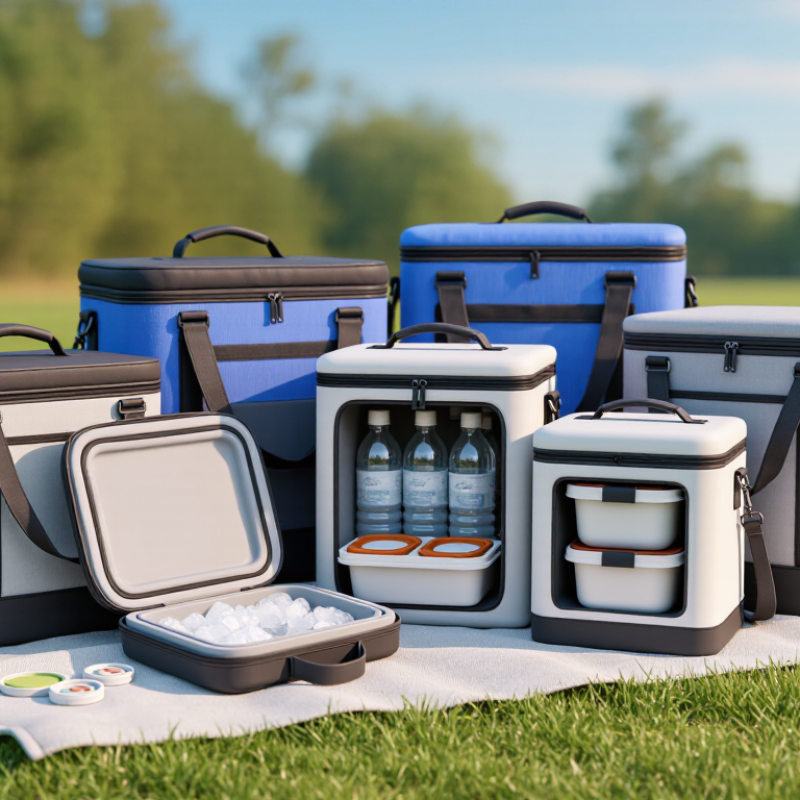
Understanding the bag’s type makes selection easier. Soft insulated coolers suit short training sessions, school games, and daily cycling. They are light, flexible, and easy to fit beside equipment. Backpack coolers work better for hikes or long walks because both hands stay free. Hard-sided models offer stronger protection and longer temperature retention. Wheeled versions help when drinks and food become heavy.
Usage should guide capacity. A small personal cooler may hold two bottles, fruit, and a sandwich. A team cooler needs more space, stronger handles, and simple access. The Outdoor Industry Association’s 2024 Outdoor Participation Trends Report recorded 175.8 million American outdoor participants in 2023. That figure shows why portable food and hydration storage matters across many activities. Still, bigger is not always better.
Insulation, leak resistance, and cleaning deserve close attention. Look for thick walls, sealed seams, and wide openings. A removable liner can reduce unpleasant odors after a hot afternoon. In my own field testing, an oversized cooler felt useful at first, but carrying it half-full became frustrating. I would choose capacity more carefully now. The cooler should fit the activity, not dominate it. The SFIA 2024 Topline Participation Report also counted 242.3 million Americans joining at least one sport or fitness activity in 2023. That broad participation includes different distances, weather conditions, and cooling needs. Test the empty weight before purchase. Small details matter.
How to Choose the Best Sports Cooler Bags? - Understanding Sports Cooler Bag Types and Their Main Uses
| Cooler Bag Type | Typical Capacity | Insulation and Structure | How It Is Carried | Best Sports Uses | Main Advantages | Things to Consider |
|---|---|---|---|---|---|---|
| Soft-Sided Lunch Cooler | About 5–12 L | Flexible insulated fabric with a zippered compartment; often designed for a small meal and a few drinks. | Hand-carry handle or shoulder strap | Practice sessions, day hikes, school sports, and individual meals at the field | Lightweight, easy to pack, and convenient for personal portions | Limited space; performance depends on insulation, ice packs, and how often it is opened. |
| Soft-Sided Team Cooler | About 15–30 L | Insulated flexible walls with a wider opening; some models include multiple compartments or a leak-resistant lining. | Shoulder strap and/or reinforced handles | Sideline drinks, small team practices, and sharing snacks among a few players | More capacity than a lunch cooler while remaining relatively easy to carry | Can become heavy when full; check whether seams and lining are suited to wet or icy contents. |
| Backpack Cooler | About 15–30 L | Insulated soft-sided body with shoulder straps; capacity and pocket layout vary by design. | Worn on the back, often with a top handle | Hiking, cycling stops, walking to a stadium, and activities where hands-free carrying helps | Distributes weight across both shoulders and leaves hands free | Look for a comfortable fit and a secure closure; a fully loaded cooler can feel bulky on longer walks. |
| Rolling Soft Cooler | About 25–50 L | Flexible insulated body fitted with wheels and a pull handle; intended to move larger loads over accessible surfaces. | Wheeled and pulled; may also have lift handles | Large tournaments, outdoor events, and trips from a parking area to a field | Reduces the need to carry a heavy load by hand | Wheels work best on smooth or firm ground and may be difficult to maneuver over sand, mud, or rough trails. |
| Hard-Sided Portable Cooler | About 20–50 L | Rigid molded shell with insulated walls and a hinged lid; typically holds its shape under normal handling. | Usually carried by one or two handles | Car-based sports events, camping, and storing drinks beside a team bench | Stable, easy to load, and useful as a fixed cooler at a venue | Bulkier to store and carry than a soft bag; check the empty weight and dimensions before buying. |
| Collapsible Cooler Bag | About 10–25 L | Soft insulated walls designed to fold or flatten when empty; structure varies between models. | Handles or shoulder strap | Occasional games, travel, and keeping in a car or sports kit for flexible use | Saves storage space when not in use and is generally easy to transport empty | May offer less shape support than a rigid cooler; avoid overloading beyond the maker’s guidance. |
| Can or Bottle Cooler Tote | About 10–20 L | Insulated compartment sized mainly for cans or bottles; some designs include dividers or an easy-access top. | Hand-carry handles or shoulder strap | Team hydration, spectator seating, and carrying chilled drinks to a practice | Organizes beverages and makes them easy to reach | Capacity may be stated as a volume or an approximate can count; bottle size and ice reduce usable space. |
Choosing tip: Match the bag’s usable capacity to the number of people and the length of the outing. Cooling time varies with insulation, starting temperature, ice-pack quantity, outside temperature, and how often the bag is opened.