How to Choose Hard Side Luggage in 2026?
Choosing Hard Side Luggage in 2026 requires more than matching a suitcase to your travel outfit. Airports remain demanding environments, with rough conveyor transfers, narrow overhead bins, and crowded hotel elevators. A suitable case should protect fragile contents while staying manageable at the check-in scale. I have learned that attractive shells can hide weak wheels, noisy handles, or difficult repairs.
This guide examines materials, construction, capacity, security features, mobility, and long-term value. Polycarbonate often balances impact resistance and weight, while aluminum can offer a rigid frame and a distinctive finish. The trade-off is real. Aluminum may dent, and some lightweight plastics can show scratches quickly. Wheel quality matters too; a smooth spinner should roll steadily across tile, carpet, and uneven pavement. Look for replaceable parts, clear warranty terms, and honest dimensions that include wheels and handles.
We will also consider 2026 travel habits, including frequent short trips, digital packing tools, and careful attention to weight limits. A suitcase that feels spacious at home may become awkward when fully packed. Small details count. Zipper performance, lining access, compression panels, and handle wobble deserve practical testing. No case is perfect. Your best choice depends on routes, packing habits, budget, and tolerance for cosmetic wear. This article uses practical comparisons and manufacturer specifications, while acknowledging that real journeys can expose weaknesses no showroom reveals.
Identify Your Travel Needs and Ideal Luggage Size
How to Choose Hard Side Luggage in 2026?
Identify Your Travel Needs and Ideal Luggage Size
Choose a case around your actual itinerary, not an imagined perfect trip. A two-night work visit may need a compact carry-on, while a week-long family holiday often calls for checked luggage. Count shoes, bulky layers, and items that must stay accessible. Measure the packed load. A rigid shell protects contents, but it cannot create extra room when overfilled.
Size limits differ between airlines and routes, so check the current carry-on dimensions before buying. Include wheels and handles in your measurements; those small details can turn a compliant-looking case into an oversized one. IATA’s 2024 passenger outlook projected 4.96 billion air travelers that year, underscoring how common crowded, high-volume travel has become. SITA’s 2024 Baggage IT Insights report recorded 6.9 mishandled bags per 1,000 passengers in 2023. Neither figure chooses a suitcase for you, but both support planning for busy journeys and keeping essentials within reach.
For a short trip, compare interior capacity with the space your daily items occupy, not just the case’s exterior dimensions. For longer travel, consider whether one large case is practical to lift, store, and maneuver through narrow hotel corridors. Weight the empty case, too; a heavier shell leaves less room before airline weight limits apply. My own packing estimate can still be optimistic. Leave a little breathing room.
Compare Hard-Shell Materials, Weight, and Durability
How to Choose Hard Side Luggage in 2026?
Hard-shell materials affect weight, impact resistance, and long-term repairability. Polycarbonate usually handles sudden impacts better than basic ABS, especially around corners and wheel mounts. ABS can feel lighter, but repeated drops may leave deeper cracks. Polypropylene bends more easily and often performs well in humid conditions. There is no perfect shell. I once chose the lightest case and regretted its thin frame after one rough connection.
Weight deserves careful measurement. Check the empty case on your own scale, not only the published listing. A difference of 1.5 kilograms reduces useful packing space under common airline limits. The 2024 IATA Global Passenger Baggage Report recorded 6.3 mishandled bags per 1,000 passengers in 2023. That figure was much lower than in 2007, but baggage still faces conveyor impacts, stacking, and rain. Strong corners, replaceable wheels, and a stable telescopic handle matter more than a glossy finish.
Tips: Press the shell gently. It should flex slightly, not collapse. Inspect wheel screws and zipper tracks. Choose a textured surface. Scratches will show less. Test the handle at full height.
I also leave space around the frame, because overpacking stresses every seam. This habit is easy to ignore, and I still forget it sometimes. Use the IATA report as context, but judge durability through construction details and independent drop-test evidence.
Assess Wheels, Handles, Locks, and Interior Features
Roll the case across a tiled floor and a rough sidewalk if you can. Wheels should track without scraping, rattling, or pulling sharply to one side. Four spinner wheels are easy to maneuver in tight aisles, but they can feel less steady on uneven pavement. Wheel quality matters more than the count. Small details matter. Check whether the wheels look replaceable, since they take repeated knocks. Extend and lower the handle several times. It should lock at useful heights without sticking; a little movement is normal, but excessive wobble gets tiring.
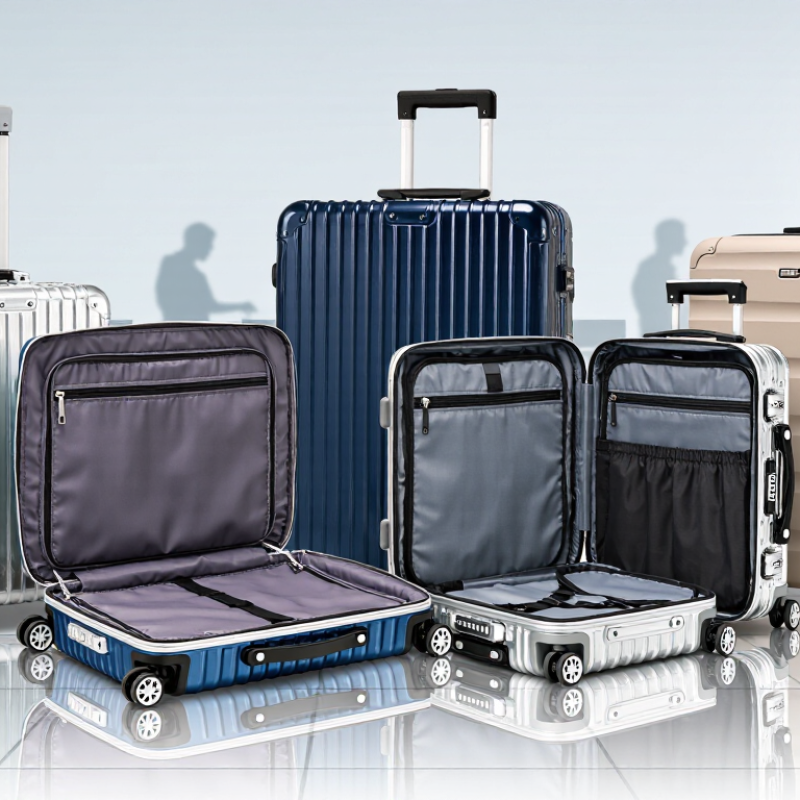
Test the lock with the zippers attached, rather than judging it by appearance. The zipper pulls should meet neatly, and the locking mechanism should operate without force. A lock may discourage casual access, but it cannot guarantee that luggage stays untouched. Inside, look for a lining that lies flat, compression straps that adjust easily, and a divider that keeps small items from sliding around. A separate pocket is handy for chargers or laundry, though extra compartments can reduce usable space.
Picture packing your usual load, not an idealized one. A bulky jacket may expose a cramped interior faster than a showroom display does. Feel the handle grip, inspect the stitching near its mounts, and compare the case’s empty weight with its capacity. Specifications help, but they can miss small annoyances. I would not dismiss a good case over one minor flaw; I would ask whether that flaw matters every travel day.
How to Choose Hard Side Luggage in 2026? - Assess Wheels, Handles, Locks, and Interior Features
| Feature | What to Assess | Practical Selection Guide | Why It Matters |
|---|---|---|---|
| Wheels | Wheel count, smooth rotation, attachment strength, and replaceability. | Four spinner wheels maneuver easily in multiple directions; two-wheel designs can be easier to pull over some uneven surfaces. Roll the case and check for wobble or scraping. | Wheels take frequent impact and are among the parts most exposed to wear. Replaceable wheel assemblies can extend a case’s useful life. |
| Telescoping handle | Smooth extension, secure locking positions, grip comfort, and side-to-side movement. | Extend and retract the handle several times. Choose a height that feels comfortable for the intended user and check that it locks without excessive looseness. | A poorly fitting or unstable handle makes a loaded suitcase harder to control and may become a failure point under strain. |
| Top and side handles | Grip comfort, secure attachment, and clearance from the shell. | Lift the empty case by each handle and check that the grip is comfortable and the attachment points feel firm. A padded or spring-loaded grip may be more comfortable when carrying a heavy case. | These handles are useful for lifting luggage into a car, onto a scale, or into overhead storage. |
| Lock | Lock type, ease of use, and compatibility with the zipper pulls or closure. | For travel that may involve U.S. Transportation Security Administration screening, a TSA-recognized lock can be opened by authorized screening personnel with a master key. Confirm current requirements for other destinations. | A recognized screening lock can reduce the chance of a lock being damaged during inspection, but no luggage lock makes a case theft-proof. |
| Shell material | Material, shell flexibility, finish, and resistance to visible scuffs. | Polycarbonate is generally lighter and more flexible than many ABS shells; ABS is often used in lower-cost cases. Material alone does not determine durability, so inspect construction and warranty terms too. | Hard shells can help protect packed items from pressure and impacts, but they can still scratch, crack, or dent depending on material and handling. |
| Interior organization | Divider panels, zippered compartments, compression straps, and lining quality. | Look for compartments that suit your packing style and straps that adjust securely. Check that zippers move smoothly and that the lining does not obstruct the shell closure. | Useful organization helps keep clothing and small items separated and can limit shifting during transit. |
| Expansion and closure | Expansion zipper or frame closure, alignment, and ease of closing when packed. | Test the closure with the case lightly packed. If it expands, remember that the extra depth can affect carry-on or checked-bag size compliance. | A smooth, aligned closure is easier to use and less likely to be strained by overpacking. |
| Size and empty weight | Exterior dimensions, wheel and handle inclusion, and the case’s empty weight. | Compare the full exterior dimensions with the specific carrier’s current baggage rules. Measure the case with wheels and handles included, and consider how much weight the empty case leaves for belongings. | Baggage limits differ by airline, route, and fare, so a size label alone does not guarantee acceptance. |
| Warranty and repair support | Warranty duration, covered components, exclusions, and access to replacement parts. | Read the written warranty carefully. Check whether wheels, handles, locks, and shipping or repair costs are covered, and whether common parts can be replaced. | Coverage varies, and warranties commonly have conditions or exclusions; clear repair options can matter as much as the stated term. |
Tip: Test the wheels, handles, zippers, and lock before purchase, and verify baggage dimensions with your carrier before each trip.
Check Airline Requirements, Warranty, and Repairability
How to Choose Hard Side Luggage in 2026?
Check Airline Requirements, Warranty, and Repairability
When I compare hard-side luggage, I check the airline’s current cabin and checked-bag rules before examining colors or compartments. Measurements must include wheels, handles, and exterior pockets. A case that fits an empty measuring frame may fail when bulging. I also verify weight limits, because a strong shell can still create an expensive surprise at the counter. For models with tracking devices or batteries, I check removal and carry-on instructions directly with the airline. Rules change.
Warranty language deserves the same attention. Look for coverage length, proof-of-purchase demands, and exclusions for airline damage, cracked shells, or worn wheels. A “lifetime” promise may cover manufacturing defects only, not normal travel wear. I prefer written terms that explain who pays shipping and where inspection occurs. Keep receipts and photograph the case before a long trip. That small record can make a claim less subjective.
Repairability often matters more than a glossy finish. Check whether wheels, handles, locks, and corner guards use replaceable parts. Ask customer service for part availability, repair pricing, and expected turnaround times. A cracked shell may be difficult to fix neatly, while a damaged wheel should not require replacing the entire case. I once chose a lighter case with poor wheel access and regretted it on uneven pavement. The mistake was mine. Now I inspect screws, seams, and wheel clearance before trusting the design.
Compare Prices and Choose the Best Long-Term Value
How to Choose Hard Side Luggage in 2026?
A low price can be tempting, but luggage value shows up after repeated trips. Compare the total cost with the features you will actually use. Check shell thickness, wheel replacement options, handle wobble, and zipper or latch quality. A case that rolls smoothly across a tiled shop floor may still rattle on rough pavement. Test it on both, if possible.
Tips: Compare similar sizes and capacities, not just sale prices. Read recent reviews for recurring complaints, such as cracked corners or wheels that loosen. Check the warranty terms, including whether shipping or replacement parts cost extra. A longer warranty is useful only when its coverage is clear.
Think about repairability before paying more for premium extras. Replaceable wheels and handles can extend a case’s useful life, while decorative finishes may add little practical value. Still, a bargain case is not automatically poor value; lighter travel or careful handling may make it perfectly adequate. I would weigh the price against likely years of use, then leave room for uncertainty. Travel habits change, and estimates are never exact.
Related Posts
-
What are the Best Accessories Bags for Global Buyers?
-
15 Best Lightweight Luggage Options You Should Consider Today
-
China Crafting the Best Accessories Bags with Unmatched Quality for Global Buyers
-
China Top 10 Luggage Accessories Manufacturers?
-
Ultimate Guide to Choosing the Best Travel Gear for Every Adventure
-

Ultimate Tips for Choosing Luggage Bags for Travel?