
top of page

How to Choose Canvas Tote Bags in 2026

Choosing Canvas Tote Bags in 2026 means looking beyond color and price. The global reusable bags market was valued at about $9.5 billion in 2023, according to Grand View Research, which also projected continued growth through 2030. That figure covers reusable bags broadly, not canvas totes alone. Still, it signals a crowded market where fabric weight, stitching, handles, and sourcing claims deserve careful attention.

Start with the job the bag must do. A thin tote may suit a book and a light lunch; heavier groceries need a sturdy base and reinforced seams. Check the handle length, too. It should sit comfortably over a coat sleeve, not dig into your shoulder. Look for clear details on fabric composition, care, and construction. Vague labels are not proof of quality. A dense canvas can feel reassuring, but weight alone does not guarantee longer use.

Circular-fashion advocate Orsola de Castro has said, “The most sustainable garment is the one already in your wardrobe.” The idea applies well to totes: a bag used often may be a better choice than several rarely carried ones. Textile Exchange reported that global fiber production reached 124 million tonnes in 2023; that figure is not tote-specific, but it highlights the wider material footprint behind everyday products. There is no perfect purchase. In 2026, compare realistic use, repairability, and transparent claims before choosing. A small seam detail matters. And your own habits matter most.
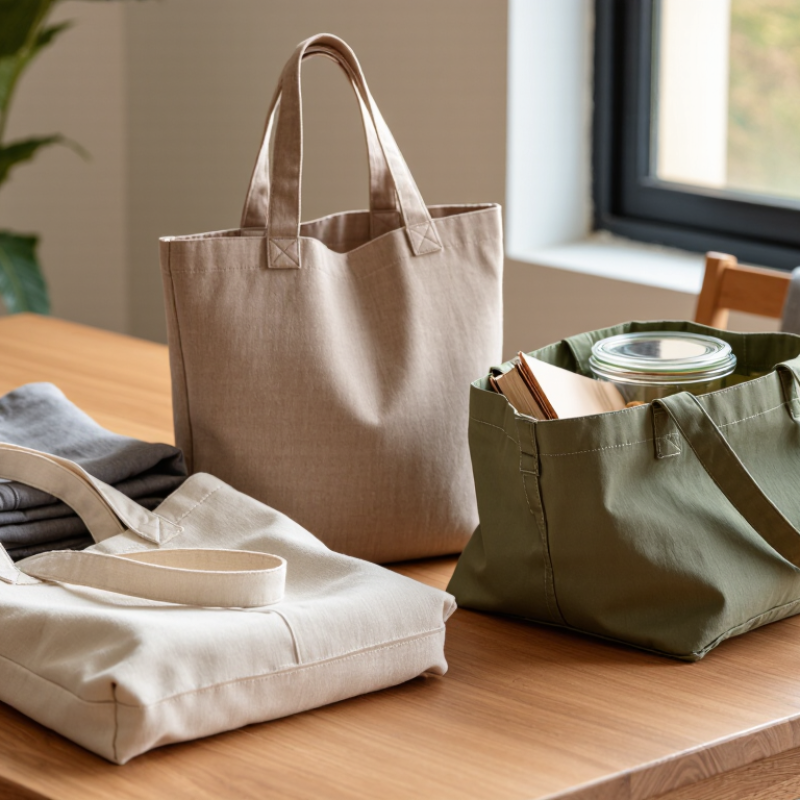
How to Choose Canvas Tote Bags in 2026

Define Your Intended Uses and Carrying Needs

Start with your actual load. A canvas tote for a market run needs a wide opening and a firm base for jars or produce. For commuting, measure your laptop and notebook, then check the bag’s interior dimensions; a separate padded sleeve may protect electronics better than thin canvas. Carrying a water bottle? Look for a gusset that keeps it upright and away from papers.

Grand View Research estimated the global reusable bags market at about US$10.3 billion in 2023 and projected continued growth through 2030.

That figure covers more than canvas totes, so it signals broad demand—not proof that any one bag suits your day. Think about loaded weight, too. A long walk with heavy groceries can make narrow handles dig into your shoulder; wider handles may feel better, but only if they sit comfortably. Check stitching where the handles meet the body, and look for a stated load limit when available. I’ve found it easy to choose by appearance and underestimate the weight of a few full bottles. Then ask yourself: will this bag still be comfortable after twenty minutes?

Compare Canvas Materials, Weights, and Treatments

When choosing canvas tote bags, compare fiber, fabric weight, and finish—not just how thick the cloth feels. Textile Exchange’s 2024 Materials Market Report estimates that global fiber production reached 124 million tonnes in 2023; polyester made up about 57%. That market-wide figure does not describe any single tote, but it shows why “canvas” alone tells you little about fiber content. Check the label for cotton, polyester, or a blend. Cotton canvas often feels breathable and substantial, while blends may dry faster. Neither is automatically better.

Weight offers a useful clue. Around 8–10 oz per square yard suits light errands; 12–16 oz usually feels sturdier for books or groceries. These are practical ranges, not universal quality grades. Check the handle stitching, too. A heavy body with weak seams can still fail. Treatments change the feel: waxed or water-repellent finishes can shed light rain, but may make fabric stiffer and complicate cleaning. They are not waterproof guarantees. If you can, handle a sample; the weight number does not reveal everything. I would also ask how the bag should be washed, since aggressive cleaning may wear down a finish sooner than expected.

Assess Construction, Handles, Closures, and Pockets

How to Choose Canvas Tote Bags in 2026

Start with the fabric and seams. A firm canvas should hold its shape when empty, while a softer weave folds easily but may sag under books or groceries. Check that the stitching is even, especially where the handles meet the body. Those small patches take repeated strain. Tug gently; loose threads or puckered seams can signal rushed construction. Feel the bottom, too. A reinforced base helps the bag stand on a café floor, though it can make the tote less comfortable to fold away. No fabric is perfect.

Handle length changes how a tote works in daily use. Short handles suit hand carrying, while longer ones should sit comfortably over a coat without sliding off. For a loaded bag, wider straps often feel kinder on the shoulder. Consider the closure: an open top gives quick access, but a zipper or snap can keep contents from spilling during a crowded commute. Pockets matter just as much. A small interior pocket can separate keys from a phone; a deep one may hide both. Try reaching inside with one hand. It is a minor test, but useful. Decide what you actually carry, not what you imagine carrying.

How to Choose Canvas Tote Bags in 2026

Suggested 100-point checklist: use these weights to compare construction, handles, closures, and pockets. They are a practical evaluation framework, not test results for specific bags.

Choose a Size, Shape, and Style for Daily Use

Start with what the bag must carry, not its advertised capacity. A lunch container, paperback, water bottle, and light sweater need more room than a phone and wallet. For everyday errands, a medium tote around 12–16 inches wide often balances capacity and control. Check the opening, too; a tall bag can still feel cramped when its mouth is narrow. Fit matters.

Shape affects how a load sits. A flat-bottomed tote stands more steadily on a desk or bus floor, while a soft-sided bag folds easily for travel. Look for reinforced handle seams and a base panel if you regularly carry books or groceries. Long straps may sit awkwardly on a shorter frame, so check where they land over a coat. Feel the weight.

Light canvas is easier to carry, but may sag under heavier items. Heavier fabric holds its shape, yet adds weight before you pack anything. Muted colors tend to hide dust, while pale canvas shows marks sooner. Before buying, check the dimensions, handle stitching, and care label; unclear care instructions are worth noticing, though they do not automatically mean poor quality. Photos rarely reveal how stiff the fabric feels.

How to Choose Canvas Tote Bags in 2026 - Choose a Size, Shape, and Style for Daily Use

Size Common Shape Approximate Dimensions (W × H × Gusset) Estimated Capacity Suitable Daily Uses Features to Check
Small Compact rectangular or flat-bottom tote 12 × 10 × 4 in (30 × 25 × 10 cm) About 7–8 L Lunch, a small notebook, personal items, or a few light purchases Short or medium handles; an inner pocket can help keep small items organized.
Medium Everyday rectangular tote with a flat bottom 14 × 15 × 5 in (36 × 38 × 13 cm) About 16–18 L Daily errands, books, a light layer, or a reusable water bottle Check that the opening is wide enough for your usual items and that the handles sit comfortably on your shoulder.
Large Deep gusseted tote 16 × 17 × 6 in (41 × 43 × 15 cm) About 25–28 L Groceries, a change of clothes, or carrying several everyday items A reinforced base and securely attached handles are useful when carrying heavier loads.
Extra large Wide, deep carryall 18 × 16 × 7 in (46 × 41 × 18 cm) About 30–35 L Bulky shopping, towels, or packing for a day out Consider a closure, a structured base, and longer handles; a full bag can become heavy.
Document-friendly Tall, narrow tote with a slim base 14 × 16 × 3 in (36 × 41 × 8 cm) About 11–13 L Folders, notebooks, and other flat items Compare the interior width with the items you carry, and look for a closure if contents need extra coverage.
Market style Open-top tote with a wide base 15 × 14 × 6 in (38 × 36 × 15 cm) About 20–23 L Produce, packaged groceries, or shopping trips A washable interior and reinforced seams can be practical; keep heavy items close to the base.

Note: Dimensions and capacities are approximate examples, not standard size categories. Capacity estimates use the listed dimensions as a simple rectangular volume; a sewn tote’s usable space may be smaller because of its shape, seams, lining, and closure. Check the manufacturer’s measurements and care instructions before buying.

Check Care Requirements, Sustainability, and Value

Care requirements can decide whether a canvas tote stays useful or ends up forgotten in a cupboard. Check the sewn-in label before buying, since cotton blends, coatings, and printed designs may need different cleaning. For everyday spills, spot-clean with cool water and mild soap; test a hidden corner first. Not every bag is machine-washable. A structured tote may lose its shape, while hot drying can shrink cotton. Let it air-dry completely, with the handles spread apart.
Small habit.

Sustainability involves more than a recycled-content claim. Look for clear material details, sturdy stitching, and handles that feel secure when the bag is loaded. A heavier canvas can feel reassuring, but it is not automatically the greener choice; extra material also has a footprint. Consider how often you will use it. A tote carried daily may offer better value than a cheaper one that frays after a few grocery trips. Check the seams near the handles, where strain often shows first. If a small tear appears, simple repairs may extend its use, though not every bag is easy to mend. I’d weigh care, durability, and likely use together rather than trust a single sustainability label.

bottom of page