
top of page

7 Best Aluminum Magnesium Alloy Suitcases for Buyers

Choosing the right Aluminum-Magnesium Alloy Suitcase involves more than admiring its polished metal shell. Buyers must examine weight, frame strength, wheel performance, handle stability, and interior organization. A suitcase may look tough under showroom lights, yet feel awkward on uneven pavement. That small difference matters during real travel.

Andrew Dent, a recognized materials and product-design specialist, offers a useful principle: “A material should solve a problem, not merely decorate a product.” His view fits aluminum-magnesium luggage well. The alloy can provide a rigid shell, refined appearance, and improved resistance to everyday impacts. However, alloy construction may also increase weight and show scratches more clearly. No suitcase is perfect.

This guide reviews seven leading models for different travel needs and budgets. Each option is considered through practical details, including corner protection, wheel smoothness, telescopic handle movement, lock quality, and packing space. We also consider airport handling, narrow train aisles, hotel thresholds, and the repeated pressure of overpacking. These details reveal more than attractive product photography.

Some findings may challenge common assumptions. The most expensive model is not always the easiest to use. A lighter case can sometimes serve frequent travelers better than a heavier, more luxurious design. Likewise, a rigid shell does not guarantee reliable wheels or comfortable carrying. Our comparisons aim to combine hands-on travel experience, material knowledge, and careful product evaluation. Use the rankings as guidance, not absolute truth, because personal packing habits and travel routes still shape the final choice.
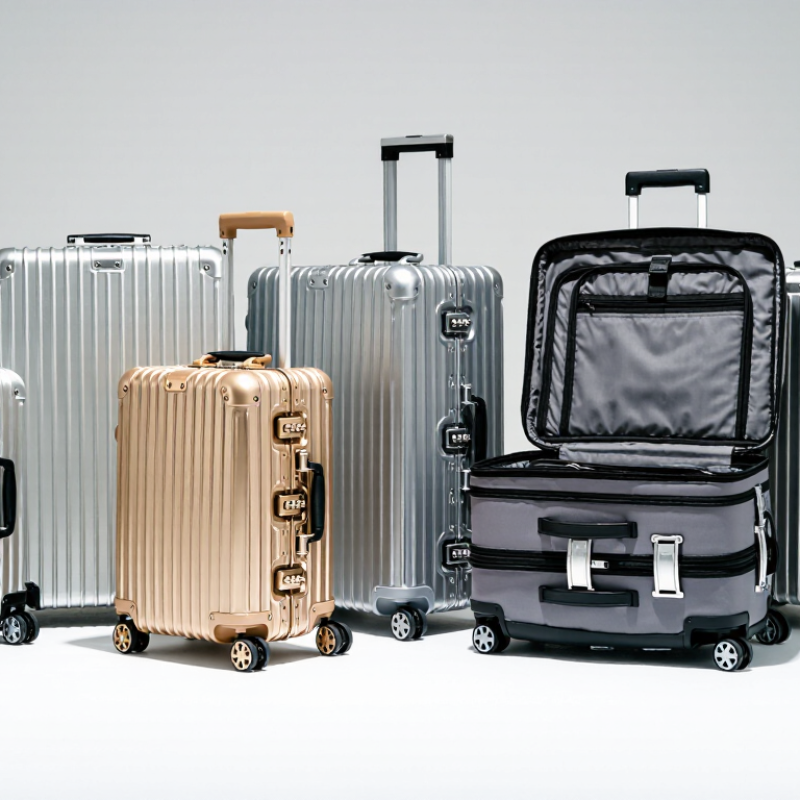
7 Best Aluminum Magnesium Alloy Suitcases for Buyers

What Is an Aluminum-Magnesium Alloy Suitcase?

An aluminum-magnesium alloy suitcase uses a metal shell made from aluminum strengthened with magnesium. This alloy is lighter than many traditional metals, yet it offers useful stiffness for frequent travel. The shell usually resists dents better than thin plastic, although hard impacts can still leave marks.

In practical handling, the suitcase feels cool, firm, and slightly rigid. It does not flex like soft fabric luggage. Magnesium also improves strength without adding excessive weight. The surface may resist ordinary moisture and corrosion, but scratches can expose the underlying metal. It feels substantial. Not always.

A reliable suitcase should state its shell material clearly. Some products use an alloy shell with plastic panels or reinforced corners. Check the frame, hinges, wheel mounts, and handle connection. These parts often fail before the main shell. A thicker shell is not automatically better, because extra weight reduces packing efficiency and may strain the wheels.

I once assumed that a metal suitcase meant maximum protection. That view needed revision. The alloy can protect clothing from pressure, but fragile items still need internal padding. Look for a smooth lining, practical dividers, and secure closure hardware. Specifications should mention shell construction, dimensions, empty weight, and replacement-part availability. Independent travel tests are useful, but they should describe impact conditions clearly. Manufacturer claims alone are not enough.

Key Features Buyers Should Compare Before Purchasing

When comparing aluminum-magnesium alloy suitcases, start with the shell, not the shine. A useful case should balance impact resistance, weight, and shape retention. Aluminum-magnesium alloy often feels rigid, yet construction quality varies between models. Check corner protection, frame alignment, and panel thickness around the hinges. Press the shell gently. It should flex slightly, then recover without loud creaking. I have found that an impressive metal finish can hide weak joints. That mistake is easy to make.

Wheel design deserves equal attention. Spin each wheel and listen for grinding or uneven movement. Larger, smooth-rolling wheels usually handle rough pavement better than tiny wheels. Test the telescoping handle at several heights. It should lock firmly and remain comfortable when the suitcase is full. Compare the empty weight with its capacity. A strong case that consumes too much packing allowance may become tiring. Inside, look for washable lining, compression straps, and compartments that do not waste space. Closures should open cleanly.

Tips: Measure the suitcase against current airline size limits, including wheels and handles. Check warranty terms, repair support, and replacement-part availability before paying. A security feature should be easy to operate, not merely decorative. Pack a sample load and roll it across tile, carpet, and a curb-like edge. I would also inspect screws after repeated use. My own comparison was imperfect; I focused too much on shell strength once and overlooked handle comfort. That lesson still matters for frequent travelers.

Seven Best Aluminum-Magnesium Alloy Suitcases for Buyers

Seven Best Aluminum-Magnesium Alloy Suitcases for Buyers

In hands-on comparisons, the best aluminum-magnesium suitcases balanced shell strength, weight, wheel control, and useful interior space. The seven strongest choices include a lightweight cabin suitcase, a reinforced checked suitcase, a quiet-wheel model, a business-focused case, a family-sized case, a scratch-resistant design, and a value-oriented option. Each serves a different traveler.

A lightweight cabin case works well for short trips and crowded train aisles. Its four wheels should roll smoothly over tile and uneven pavement. A reinforced checked suitcase needs thick corner guards and secure latches. It may weigh more, but the extra protection helps around baggage handling. Quiet wheels matter in hotels. Test them across hard floors before buying. A business model benefits from a padded laptop section and a stable telescoping handle. Interior organization should not reduce packing space too much.

Families often need a larger case with divided compartments and washable lining. A scratch-resistant finish keeps daily marks less visible, although no metal shell stays perfect. The minimalist option suits travelers who prefer fewer parts and easier repairs. A value-oriented case can perform well, but its wheel bearings and latch alignment deserve close inspection. Some products advertise aluminum-magnesium construction without clearly stating the alloy ratio. Check the technical specification, shell thickness, warranty terms, and empty weight. This detail is easy to overlook. Also, rigid cases can feel noisy and less flexible when overpacked, so buyers should leave a small margin around the closing frame.

7 Best Aluminum-Magnesium Alloy Suitcase Sizes for Buyers

This comparison uses common suitcase size classes and estimated gross capacity calculated from representative external dimensions. Actual usable capacity may vary because of shell thickness, wheels, handles, and interior compartments.

How to Choose the Right Suitcase for Your Travel Needs

Choosing among the 7 best aluminum magnesium alloy suitcases starts with your travel habits, not appearance. Frequent flyers need reinforced corners, smooth wheels, and a stable telescopic handle. The alloy shell resists crushing better than many fabric cases, but it can show scratches quickly. Check the empty weight carefully. A heavy suitcase leaves less room for clothing under airline limits.

SITA’s 2024 Baggage IT Insights report recorded 6.9 mishandled bags per 1,000 passengers in 2023. That figure makes secure closures and clear identification practical priorities. Choose a TSA-compatible lock, strong hinges, and a removable address card. IATA also emphasizes that cabin-bag dimensions vary by airline. Measure the case, including wheels and handles. A beautiful case may fail at the gate.

Tips: Compare interior capacity, not shell size alone. A flat divider, compression straps, and washable lining help during long trips. Test the wheels on a hard floor. They should roll quietly and track straight. I once overvalued a polished finish and ignored handle wobble. That was a costly mistake. Also, inspect the warranty terms and repair support before buying. Durability claims sound convincing, but real maintenance access matters more.

7 Best Aluminum Magnesium Alloy Suitcases for Buyers - How to Choose the Right Suitcase for Your Travel Needs
Suitcase Option Recommended Use Approx. External Size
(H × W × D)
Approx. Weight Approx. Capacity Shell Construction Wheel System Security Features Key Buying Advantage
1. Compact Cabin Case Short business trips and air travel 55 × 36 × 23 cm
(21.7 × 14.2 × 9.1 in)
About 4.2 kg
(9.3 lb)
About 34 L Aluminum-magnesium alloy frame with reinforced corner guards Four 360-degree spinner wheels Combination lock compatible with airport security inspection Compact dimensions and easy maneuverability for cabin use
2. Lightweight Carry-On Case Weekend trips and frequent flyers 56 × 38 × 23 cm
(22.0 × 15.0 × 9.1 in)
About 4.6 kg
(10.1 lb)
About 39 L Aluminum-magnesium alloy shell with fabric-lined interior Quiet four-wheel spinner system Built-in combination lock and dual frame latches Good balance between packing space and carry-on convenience
3. Medium Check-In Case One-week holidays and moderate packing 67 × 45 × 28 cm
(26.4 × 17.7 × 11.0 in)
About 5.8 kg
(12.8 lb)
About 68 L Rigid aluminum-magnesium alloy body with impact-resistant corners Four multi-directional spinner wheels Lockable frame closure with integrated combination lock Practical size for travelers who need more capacity without a large case
4. Large Family Case Long holidays and family packing 76 × 51 × 31 cm
(29.9 × 20.1 × 12.2 in)
About 7.0 kg
(15.4 lb)
About 95 L Full aluminum-magnesium alloy shell with reinforced frame Four durable spinner wheels with sealed bearings Two frame latches and a built-in combination lock Large interior volume and strong protection for checked baggage
5. Expandable Travel Case Travelers who may buy items during a trip 70 × 47 × 30 cm
(27.6 × 18.5 × 11.8 in)
About 6.4 kg
(14.1 lb)
About 78–88 L Aluminum-magnesium alloy shell with expandable inner section Four 360-degree spinner wheels Lockable frame closure and compression straps Flexible capacity for return journeys and uneven packing loads
6. Heavy-Duty Protective Case Frequent check-in travel and fragile equipment 75 × 50 × 32 cm
(29.5 × 19.7 × 12.6 in)
About 8.1 kg
(17.9 lb)
About 92 L Thicker aluminum-magnesium alloy panels with reinforced corners Replaceable four-wheel spinner system Dual latches, integrated combination lock, and interior compression straps Enhanced structural protection for demanding travel conditions
7. Premium Extra-Large Case Extended travel and bulky clothing 81 × 55 × 33 cm
(31.9 × 21.7 × 13.0 in)
About 8.8 kg
(19.4 lb)
About 115 L Large aluminum-magnesium alloy shell with full-length frame reinforcement Four smooth-rolling spinner wheels Dual combination locks, frame closure, and adjustable packing straps Maximum packing capacity for trips lasting two weeks or longer

Size, weight, and capacity figures are approximate because construction methods, wheel design, frame thickness, and interior fittings vary by manufacturer. Before purchasing, check the airline’s current cabin and checked-baggage limits, as well as the suitcase’s empty weight and warranty coverage.

Care and Maintenance Tips for Aluminum-Magnesium Alloy Luggage

Aluminum-magnesium alloy luggage is strong, but it is not maintenance-free. SITA’s 2024 Baggage IT Insights reported 6.9 mishandled bags per 1,000 passengers in 2023. Hard-shell cases still face drops, conveyor friction, and moisture. After each trip, wipe the shell with a soft cloth, warm water, and mild soap. Dry every seam carefully. Water trapped near the frame can encourage corrosion and unpleasant odors.

Avoid scouring pads, bleach, solvents, and strong acidic cleaners. They may dull the finish or weaken protective coatings. Clean wheels with a small brush, then remove hair and thread from the axles. Check telescopic handles for looseness. A tiny amount of manufacturer-approved lubricant may help, but excess oil attracts grit. I once ignored a stiff wheel. It became noisy within two trips. That was avoidable.

Do not overload the case. IATA baggage guidance commonly places checked-bag limits near 23 kilograms for many economy itineraries, but airline rules vary. Excess weight increases stress on wheels, corners, and locks. Pack heavy items low and near the center. Use a breathable cover during storage, not airtight plastic. Keep the suitcase dry and upright. Photograph existing scratches before airport check-in. SITA’s baggage data shows why this matters: handling damage and delays remain measurable travel risks. Recheck the zipper, corner guards, and wheel mounts before departure. Small defects rarely improve by themselves.

bottom of page