top of page

2026 Top Hard Side Luggage Sets for Wholesale Buyers

The 2026 wholesale luggage market is entering a more demanding phase. Travelers want stronger shells, quieter wheels, secure closures, and designs that look polished at airport check-in. Wholesale buyers need more than attractive samples. They must evaluate durability, packing efficiency, compliance, warranty support, and landed cost before placing large orders. Hard Side Luggage Sets are becoming a practical category for retailers seeking coordinated products across cabin, medium, and large sizes.

Industry data supports this opportunity. IATA’s 2025 passenger-demand outlook projected more than five billion air travelers worldwide, creating sustained demand for dependable travel equipment. Grand View Research also identifies luggage as a growing consumer-goods segment, supported by tourism recovery, rising disposable income, and replacement purchases. Euromonitor International’s travel and luggage research highlights a similar shift toward functional design, product durability, and brand differentiation. These reports use different methods and market definitions. Their estimates should not be treated as identical.

That matters for purchasing decisions. A glossy shell may attract attention, but weak corner protection can create costly returns. A smooth spinner system should survive repeated loading, not only a showroom demonstration. Buyers should compare ABS, polycarbonate, and hybrid constructions, while checking zipper quality, handle stability, wheel testing, and spare-part availability. Sustainability claims also require careful verification, especially when recycled materials are advertised without clear evidence. No forecast is flawless. Still, the strongest 2026 collections will combine tested construction, sensible pricing, consistent dimensions, and credible supplier documentation. This guide examines the leading Hard Side Luggage Sets for wholesale buyers and the details that deserve closer inspection.
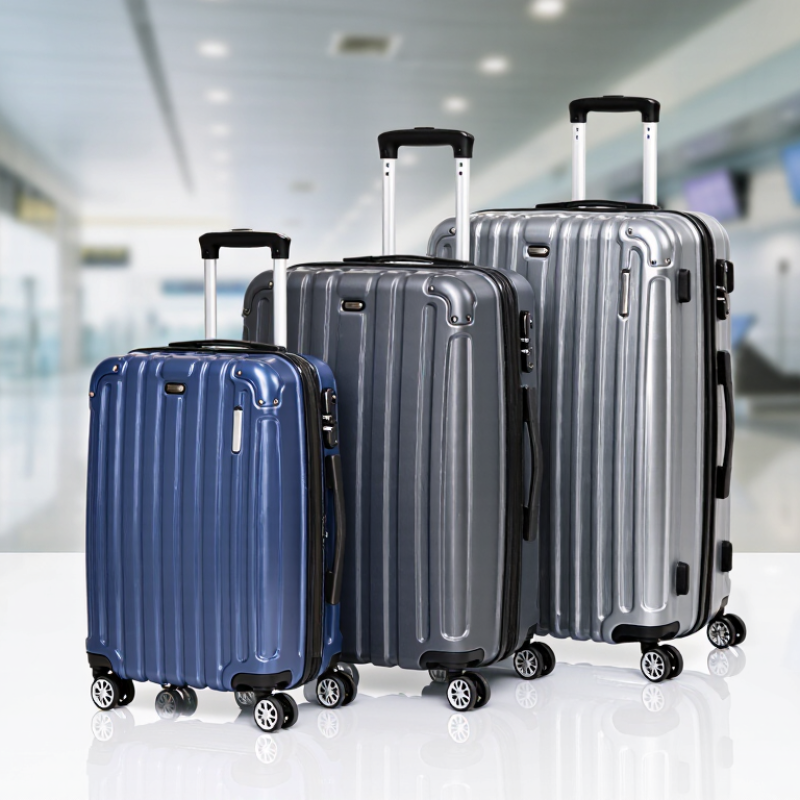
2026 Top Hard Side Luggage Sets for Wholesale Buyers

Hard-Side Luggage Sets: Definition, Features, and Wholesale Applications

Hard-side luggage sets combine molded shells, matching cases, and coordinated sizes for retail or travel distribution. Their rigid exterior usually uses polycarbonate, ABS, or blended materials. Polycarbonate bends better. ABS often costs less.

According to Grand View Research, the global luggage market exceeded USD 20 billion in 2023, with strong growth projected through 2030. IATA also forecast nearly 5 billion air travelers in 2025. These figures support steady wholesale demand for durable, space-efficient sets. Buyers should examine shell thickness, zipper quality, wheel replacement options, and handle stability. A polished appearance helps, but weak wheels can damage repeat sales.

Wholesale applications include department stores, online retailers, corporate travel programs, and seasonal promotions. Three-piece sets offer practical variety: a carry-on, medium case, and large case. However, the largest case may exceed airline size limits. That detail needs checking. Merchants should request measured dimensions, empty weight, carton size, and factory inspection records before ordering. Testing should include loaded rolling, corner impact, handle cycling, and zipper opening. The shell is not invincible. Better suppliers admit this limitation and explain suitable use conditions. According to the 2025 Travel Goods Association industry outlook, consumers increasingly value lightweight construction, repairability, and flexible organization. Wholesale sets that combine these features can reduce returns and improve shelf appeal, although price pressure may force compromises.

Key Materials and Construction Standards for 2026 Luggage Sets

For 2026 wholesale luggage sets, material selection must balance impact resistance, weight, and production consistency. Fortune Business Insights valued the global luggage market at approximately USD 19.78 billion in 2023. Its report projects strong growth through 2032, increasing pressure on suppliers to deliver reliable construction at scale. Polycarbonate shells usually provide better impact performance than basic ABS. PC/ABS blends can reduce cost, but quality varies widely. A thicker shell is not automatically stronger. Poor molding can create weak corners, uneven walls, and visible stress marks.

Construction details deserve equal attention. Buyers should request shell-thickness records, drop-test results, zipper-cycle data, wheel-abrasion tests, and handle-extension testing. SITA’s Baggage IT Insights 2024 reported 6.9 mishandled bags per 1,000 passengers in 2023. That figure shows why wheel mounting, handle stability, and protective corners matter during repeated handling. Dual spinner wheels should rotate smoothly after load testing. Rivets and screws need secure reinforcement, not decorative placement. The telescopic handle should resist side pressure without excessive movement. Small gaps can collect dust and moisture. They are easy to overlook.

Testing claims require careful review. Suppliers should identify the exact method, sample size, test date, and laboratory. Generic “quality approved” language is weak evidence. I would also inspect ten random units from a production batch, not just one showroom sample. That step is less convenient. It often reveals inconsistent lining, loose wheel housings, or imperfect shell alignment. For wholesale buyers, honest documentation is more valuable than impressive specifications.

Top Hard-Side Luggage Set Types for Different Buyer Needs

2026 Top Hard Side Luggage Sets for Wholesale Buyers

Top Hard-Side Luggage Set Types for Different Buyer Needs

Wholesale buyers should match each hard-side luggage set with its selling environment. A three-piece nesting set, commonly 20, 24, and 28 inches, suits department stores with limited shelf space. The cases fit inside one another during shipping. A two-piece set, pairing a cabin case with a medium checked case, works better for frequent travelers and smaller households. Not every customer needs three sizes.

Budget-focused retailers often choose ABS shells because they offer lower purchasing costs and colorful surface options. Buyers seeking stronger perceived value may prefer polycarbonate blends, which usually handle repeated impacts better. An aluminum-frame design can attract premium shoppers, but its heavier weight may reduce demand among air travelers. That trade-off needs honest product testing.

For online sellers, expandable cases and quiet spinner wheels can reduce return complaints. Check the zipper movement, handle wobble, wheel alignment, and corner protection on real samples. I have found that attractive photos often hide weak telescopic handles. That assumption fails. Ask suppliers for carton dimensions, gross weight, loading quantity, and replacement-part availability before placing a bulk order. A luggage set with neat stitching and stable wheels may outperform a cheaper model with a more impressive shell finish. Still, color forecasts can be wrong. Small trial orders provide useful evidence before larger seasonal commitments.

Wholesale Pricing, Minimum Orders, and Supplier Evaluation Criteria

For 2026 wholesale buying, hard side luggage sets should be priced by total cost, not unit price alone. Request written quotes for each size, material, color, and packing method. Confirm whether prices include tooling, cartons, spare wheels, sample fees, and shipping terms. Ask for price breaks at different quantities. A cheap quote can hide expensive details.

Minimum order quantity affects cash flow and product risk. A supplier may require 300 sets, while your market may support only 120. Negotiate a mixed-size order or a smaller trial batch. Keep the agreement clear. Confirm production time, payment stages, replacement terms, and inspection access before depositing funds. Flexibility matters.

Evaluate suppliers through evidence, not polished catalogs. Request shell specifications, wheel-cycle test results, handle testing, drop-test records, and recent quality-control photos. Check factory capacity against your planned volume. Ask how defects are recorded and corrected. Do not accept vague answers. A dependable supplier should explain batch tracking and provide realistic lead times. I have seen forecasts fail when buyers ignored seasonal delays. My own cost estimates have also missed packaging changes. That is worth admitting. Compare landed cost, defect allowance, reorder speed, and communication quality. A small trial order may reveal more than a long presentation.

Quality Control, Customization, and Shipping Considerations for Buyers

For 2026 wholesale luggage programs, hard-side quality starts before container loading. Request pre-production samples, not only catalog photos. Check shell thickness at corners, wheel alignment, zipper tension, and handle movement. A useful test drops a packed case from a controlled height. Repeat it on different sizes. Inspect cracks, loose rivets, and warped frames afterward. Small defects become expensive returns. Ask for written tolerances and inspection records. Photographs help, but physical samples reveal more.

Customization needs measurable specifications. Confirm shell material, color references, logo placement, lining weight, lock configuration, and carton dimensions. Use a signed sample as the production reference. Color can shift between batches. That detail is often underestimated. For private-label orders, inspect logo edges and print adhesion after rubbing. Request an independent inspection before final payment. A pass rate alone is not enough. Review defect categories and rework evidence. I would also leave room for improvement. Overly strict cosmetic standards may increase costs without improving customer experience.

Shipping decisions affect landed cost and product condition. Calculate carton volume, container utilization, insurance, and duties. Use corner protection and moisture-resistant wrapping for long routes. Confirm carton drop tests and pallet stability. Ask whether spare wheels, handles, and locks ship separately. They can support local after-sales service. Agree on production dates, loading photos, and accurate documents before dispatch. Build buffer time for port delays. Fast shipping is not always reliable. A cheaper freight quote may hide weak packaging or unexpected surcharges. Track damage rates after arrival, then adjust the next order.

2026 Top Hard Side Luggage Sets for Wholesale Buyers - Quality Control, Customization, and Shipping Considerations for Buyers

Luggage Set Configuration Typical Shell Material Common Size Combination Approx. Empty Weight per Set Recommended Wholesale Order Quantity Quality-Control Checkpoints Customization Options Typical Production Lead Time Shipping Considerations
Entry-Level 3-Piece Set ABS or ABS/PC blend 20 in, 24 in, 28 in 9.0–12.0 kg 300–500 sets Shell thickness consistency; corner impact resistance; zipper strength; wheel alignment; handle locking. Color matching, logo plate, zipper pull, lining print, carton artwork. 35–55 days Nested packing reduces volume. Confirm carton dimensions and gross weight before freight quotation.
Mid-Range 3-Piece Set Textured polycarbonate 20 in, 24 in, 28 in 8.0–11.0 kg 200–400 sets Panel flex and recovery; surface finish; wheel noise; telescopic handle play; seam and lining quality. Custom color, embossed or printed mark, interior divider, compression panel, hangtag. 40–60 days Textured surfaces help reduce visible scratches. Use corner protection and moisture-resistant outer cartons.
Premium 3-Piece Set Virgin polycarbonate 20 in, 24 in, 28 in 7.5–10.5 kg 100–300 sets Material traceability; impact testing; shell warpage; wheel durability; lock function; stitching and odor inspection. Custom mold texture, color masterbatch, metal badge, premium lining, gift packaging. 50–75 days Higher unit value may justify stronger packaging and cargo insurance. Check dimensional-weight impact.
Expandable Family Set Polycarbonate or ABS/PC blend 20 in, 24 in, 28 in with expanders 9.0–12.5 kg 200–400 sets Expansion zipper cycle test; increased-load wheel test; handle stability; usable internal volume; closure alignment. Expansion gusset color, organizer layout, logo application, zipper specification, packaging inserts. 40–65 days Expanded cases can exceed carrier size limits. Ship and measure samples in both compressed and expanded states.
Carry-On and Medium Set Polycarbonate or ABS 20 in and 24 in 5.0–7.5 kg 300–600 sets Carry-on dimensions; wheel clearance; handle height; zipper travel; internal capacity; drop-test performance. Cabin-focused dimensions, USB pocket design, color assortment, interior label, retail-ready box. 30–50 days Verify destination airline size rules separately. Compact cartons generally improve pallet utilization.
Large Checked-Luggage Set Textured polycarbonate or ABS/PC blend 24 in and 28 in 7.0–10.0 kg 200–400 sets Loaded-wheel rolling test; corner and edge impact; handle fatigue; shell dent recovery; zipper and lock inspection. Heavy-duty wheel option, reinforced corners, custom lining, carton divider, care label. 40–60 days Large cartons consume more cubic volume. Compare ocean, rail, air, and consolidated freight by landed cost.
Lightweight Business Set Thin-wall polycarbonate with reinforced frames 20 in, 24 in, 28 in 6.5–9.0 kg 200–500 sets Weight tolerance; shell strength at reduced thickness; frame rigidity; wheel mounting; handle fatigue; balance when packed. Dedicated laptop compartment, garment section, matte finish, logo badge, molded divider. 45–70 days Lightweight designs require strict protection against compression in transit. Use pre-shipment carton drop testing.
Mixed-Color Retail Set ABS, ABS/PC blend, or polycarbonate 20 in, 24 in, 28 in; 3–5 colors 8.0–11.5 kg 300–800 sets Color consistency between production lots; barcode accuracy; assortment ratio; component interchangeability; final appearance. Color assortment, barcode labels, shelf-ready cartons, inserts, hangtags, assortment-specific packaging. 35–60 days Separate cartons by color and size. Prepare a packing list showing carton count, assortment, net weight, and gross weight.
bottom of page